
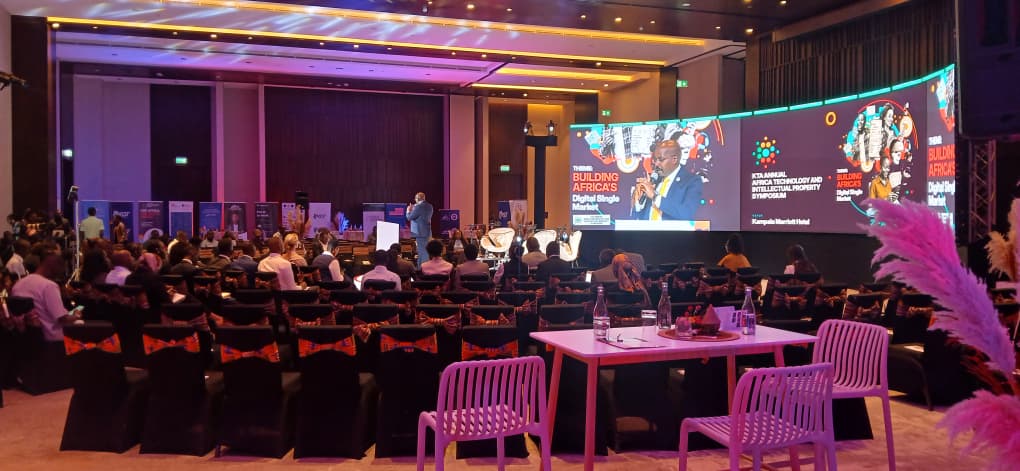
The Integrated Refugee Organization (IRO) participated in the KTA Annual Africa Technology and Intellectual Property Symposium (ATIS) 2026, held on 22–23 October at the Kampala Marriott Hotel in Kampala, Uganda. The symposium brought together stakeholders to discuss technology, intellectual property, cybersecurity, data protection, digital trade, and Africa’s evolving digital economy.
Representing IRO, Executive Director Donatien Niyongendako supported the Digital Security Desk in collaboration with the Collaboration on International ICT Policy for East and Southern Africa (CIPESA), providing practical, hands-on assistance to help participants strengthen the security of their digital devices, accounts, and communications.
IRO’s participation connected practical digital protection with its broader commitment to refugee inclusion, digital rights, entrepreneurship, and meaningful participation in Africa’s technology and AI governance discussions.
Bringing practical digital security support closer to people
As digital technologies become increasingly central to communication, business, civic participation, and access to essential services, protecting devices, accounts, and sensitive information is fundamental to safe and meaningful digital participation.
Human rights defenders, journalists, activists, civil society organizations, and people living in displacement contexts may face particular digital security challenges. Practical support can help individuals strengthen account security, improve device protection, adopt safer communication practices, and reduce exposure to digital threats.
 At the ATIS 2026 Digital Security Desk, IRO contributed practical technical assistance to help participants improve their digital security practices. The engagement demonstrated the value of bringing hands-on support closer to people who rely on digital technologies for their professional activities, communications, and everyday work.
This contribution complements IRO’s ongoing work to strengthen digital protection and resilience among refugees, human rights defenders, journalists, and other at-risk communities.
Through its Digital Security Helpdesk and Resource Center, IRO provides digital security support and promotes safer, more inclusive access to technology. IRO also facilitates free access to computers and devices, internet connectivity, and shared workspace, helping refugees and other underserved communities access digital resources, develop their skills, and pursue educational, professional, and entrepreneurial opportunities. These initiatives reflect the organization’s understanding that digital security is not merely a technical concern: it is an essential foundation for protecting rights, participating in public life, and accessing economic opportunities.
Refugees must not be left behind in Africa’s digital economy
IRO emphasizes that refugee traders, entrepreneurs, innovators, and technologists must not be left behind as Africa advances its digital economy.
Across refugee communities, people use digital tools to run businesses, reach customers, manage payments, develop services, and respond to challenges in their communities. Yet refugee-led enterprises can face barriers to identity verification, financial services, reliable connectivity, digital platforms, financing, skills development, and access to markets.
These barriers can reinforce one another, limiting the ability of refugee-owned businesses to participate fully in digital commerce and benefit from emerging technologies.
Refugees should therefore not be viewed only as beneficiaries of digital services or humanitarian assistance. They are also business owners, traders, developers, innovators, researchers, and contributors to Africa’s economic and technological development.
Meaningful inclusion requires more than access to devices or digital skills training. It also requires accessible digital infrastructure, appropriate identity and verification mechanisms, inclusive financial systems, affordable connectivity, market opportunities, and policies that recognize the contributions and circumstances of displaced communities.
For IRO, inclusive digital transformation means creating conditions in which refugees can safely use technology, develop their ideas, grow sustainable enterprises, and participate in shaping the digital future of the countries and communities where they live.
Connecting digital security with inclusive AI governance: IRO’s AI Made in Africa paper
IRO’s engagement at ATIS 2026 also connects with its broader work on technology policy and refugee participation in Africa’s digital transformation, including the policy paper authored by Donatien Niyongendako:
AI Made in Africa: Removing Policy Barriers for Refugee-Led SMEs in East Africa and the Great Lakes Region. https://integratedrefugee.org/ai-made-in-africa-why-refugee-led-smes-must-be-part-of-africas-ai-future/
https://www.youtube.com/watch?v=cRgrZGBvEzs
The paper examines opportunities for artificial intelligence to support refugee-led small and medium-sized enterprises (SMEs), alongside the policy, infrastructure, and institutional barriers that can prevent displaced entrepreneurs from benefiting from digital innovation. With a focus on the East African Community and the wider Great Lakes region, it advocates greater recognition of refugee entrepreneurs as participants in Africa’s digital economy.
A central argument is that access to AI tools does not automatically translate into meaningful economic participation. Refugee-led businesses may still face obstacles related to identity documentation, financial inclusion, platform verification, connectivity, and access to markets. Addressing these interconnected barriers is essential if AI is to contribute to more inclusive economic opportunities.
The paper highlights the potential for practical AI adoption in business activities such as accounting, inventory management, customer relations, logistics, and e-commerce. It also underscores the importance of addressing barriers faced by refugee women entrepreneurs and ensuring that displaced communities can contribute to the policies shaping their digital futures.
IRO advocates an approach to AI governance that includes refugees not only as users of technology, but also as entrepreneurs, researchers, knowledge producers, innovators, and contributors to policy development. Their lived experiences, technical expertise, and economic activities can help inform AI systems and policies that respond to diverse African contexts.
Achieving this requires meaningful participation in policy design, improved access to digital and financial infrastructure, practical support for enterprise development, and opportunities for refugee-led businesses to participate in innovation ecosystems.
Digital security is an integral part of this agenda. As refugee entrepreneurs and communities increasingly engage with digital platforms and AI-enabled services, they need to be able to protect their identities, business information, communications, and sensitive data.
For IRO, the goal is not simply to expand access to AI, but to help create the conditions in which refugees can safely use, shape, and benefit from Africa’s digital and AI economy.
Building partnerships for safer and more inclusive digital futures
IRO values opportunities such as ATIS 2026 to engage with technology professionals, policymakers, civil society organizations, and other stakeholders working to shape Africa’s digital future.
The collaboration around the Digital Security Desk with CIPESA reflects the importance of practical cooperation in advancing digital security and inclusion. IRO will continue to strengthen its work across digital protection, digital rights, information integrity, refugee-led innovation, and inclusive AI governance.
Through its Helpdesk, Resource Center, research, advocacy, and partnerships, IRO seeks to advance a digital environment in which displaced communities can protect themselves, develop their capabilities, build sustainable enterprises, and contribute to technological innovation.
IRO calls on policymakers, technology companies, innovation hubs, civil society organizations, development partners, and private-sector actors to include refugee traders, entrepreneurs, and technologists in the opportunities, partnerships, and decision-making processes shaping Africa’s digital future.
Africa’s digital transformation will be more inclusive when refugees can participate safely, build sustainable enterprises, develop technology, and help shape the policies governing the digital and AI economy.
About the Integrated Refugee Organization (IRO)
The Integrated Refugee Organization (IRO) is a refugee-led, non-profit organization established in Uganda. IRO works to acquire, protect, promote, empower, and integrate asylum seekers, refugees, internally displaced persons, migrants, and host communities through community-driven programmes and partnerships. Its work spans digital security, protection, digital rights, innovation, and the meaningful participation of displaced communities in social and economic development.
Learn more: integratedrefugee.org
Access the IRO Digital Security Helpdesk:
