
Digital technologies have become increasingly important for Indigenous communities to communicate, organize, document human rights concerns, share information and engage with their communities. At the same time, increased reliance on mobile phones and online platforms exposes community members and organizations to risks including phishing, account compromise, malware, insecure communication, data loss and unauthorized access.
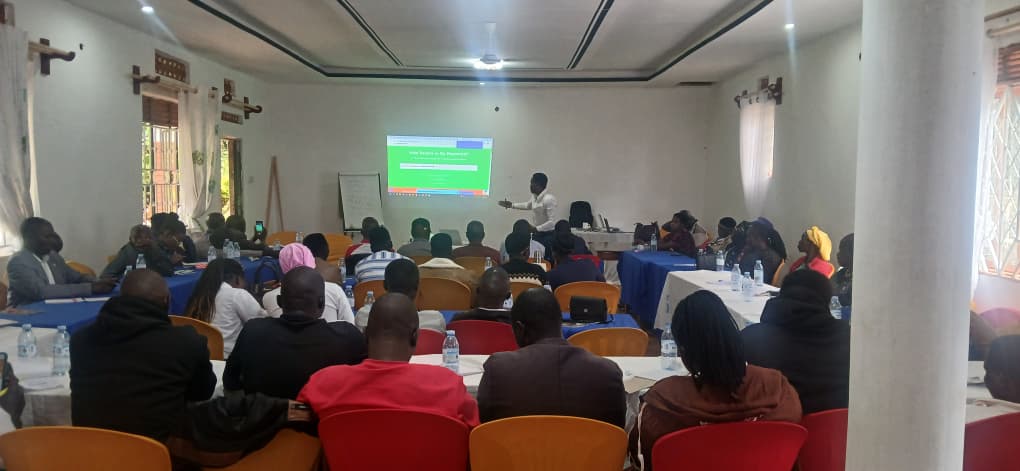
Recognizing these challenges, the Integrated Refugee Organisation (IRO) conducted a two-day practical Digital Security Training for the Bennet Mosop Community Association (BMCA), an Indigenous organisation based in Kapchorwa District, Eastern Uganda. Held on 11–12 August 2026, the training brought together 50 participants and focused on strengthening both individual and organisational digital resilience.
The training moved beyond awareness-raising by supporting participants to apply security measures directly to their own devices. Participants learned about phishing and social engineering, password and account security, two-factor authentication (2FA), secure communication, mobile-phone security, data protection and backup, software updates, privacy tools and general digital security hygiene.
From awareness to practical action
 A key feature of the training was the hands-on configuration of security measures. By the end of the practical sessions:
- 40 participants (80%) updated their phone operating systems and applications.
- 37 participants (74%) enabled or configured two-factor authentication.
- 37 participants (74%) installed or configured Signal.
- 37 participants (74%) completed data backups.
- 37 participants (74%) installed or configured privacy and circumvention tools including Orbot and Psiphon.
- All 50 participants (100%) removed unwanted forwarded-call settings from their phones.
These results demonstrate the value of practical, device-based digital security support. Rather than simply discussing security principles, participants were able to identify weaknesses and make concrete improvements during the training itself.
Designing digital security around community realities
The training also highlighted the importance of an inclusive approach to digital security. While mobile phones were the primary devices used by participants, 10 participants (20%) used basic/non-smartphones, while only one participant had access to a laptop. This limited access to some application-based and computer-security measures and demonstrated the digital access gaps that can affect Indigenous and rural communities.
For IRO, these findings reinforce the importance of designing digital security interventions around the actual technological environment of communities not assuming that everyone has a smartphone, computer, reliable connectivity or the same level of digital literacy.
Building long-term digital resilience
The training demonstrated that digital security is not a one-time activity. Participants will need continued support as devices, applications and digital threats evolve. The training therefore recommended establishing a digital security focal point within BMCA, developing an organisational digital security policy, maintaining regular updates and backups, establishing an incident reporting mechanism, conducting refresher training and maintaining access to technical support.
For IRO, supporting Indigenous communities is part of a broader commitment to strengthening digital safety, civic participation and community resilience among communities that may face heightened digital and information security risks.
IRO will continue to work with community-based and Indigenous organisations to expand access to practical digital security knowledge, tools and technical support, helping communities protect their devices, accounts, communications and information while strengthening their ability to participate safely in digital spaces.
